EMOTIONAL MANAGEMENT IN CRISIS PERIOD
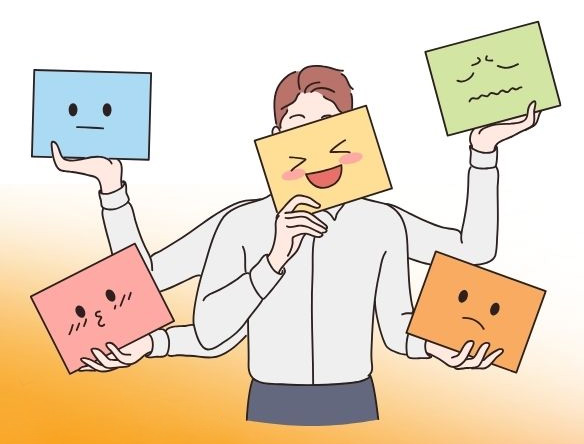
Benefits of participating
- Understand the nature of crises and emotions
- Recognize the importance of emotional management
- Know how to recognize the inner nature
- Know how to apply the model to "emergency" emotions
- Applying techniques to adjust the actual psychology
- Building a long-term mental "immune system"
Training methods
- Power Point presentation, group presentation
- Join the discussion, guide and coaching through the practice of connecting to the actual work (games, exercises)
- Watch the video clip, role playing
- Handle real situations and with reference books
- Tell the story/Sharing real experiences
- Each participants will be practicing and receiveing suggestions, editing in class
Course content
-
The Nature of Crisis & Emotions
- Redefining the crisis: Not only external events (epidemics, economics, personal events) but also internal imbalances.
- Importance: Why EQ (Emotional Quotient) is more important than IQ (Intelligence Quotient)
- Shift: Transition from a reactive state to a proactive state.
-
Identifying the "Storm" Inside
- Common emotions:
- Fear & Anxiety.
- Denial.
- Anger and Blame (Anger & Blame).
- Burnout & Hopelessness.
- Biological reaction: "Fight-Flight-Freeze" mechanism.
- Consequences of emotional neglect: Wrong decision-making, relationship breakdown, deterioration of physical health.
- Common emotions:
-
The 4-Step Strategy: The R.A.I.N Method
- R (Recognize): Identification - "I'm feeling anxious/angry".
- A (Allow): Accept – Allow the emotion to exist instead of banishing it.
- I (Investigate): Find out - "Why do I feel this way? How is my body reacting?"
- N (Non-Identification): Detached – "I have feelings of anxiety, but I'm not that anxiety".
-
Practical psychological adjustment techniques
- Information Input Control (Information Diet)
- Limit "Doomscrolling" (constantly reading negative news).
- Select reputable news sources, set a fixed time to update news during the day.
- "Anchoring" Technique (Grounding Techniques)
- The 5-4-3-2-1 rule: Find 5 things that can be seen, 4 things that can be touched, 3 sounds, 2 scents, 1 taste.
- Breath control: Use the Box Breathing or 4-7-8 technique to calm the nervous system.
- Circle of Control
- Circle of control: What we can do (attitudes, habits, actions).
- Circle of Interest: What we can't change (world economy, other people's decisions).
- Action: Focus 100% of your energy on the control circle.
- Information Input Control (Information Diet)
-
Building a long-term mental "immune system"
- Establish Routines: Maintain small routines even when the world is upside down (sleep on time, clean the house)..
- Social connections: Don't isolate yourself; seek support from relatives or professionals.
- Self-compassion: Stop judging yourself when you feel weak or unproductive.
-
Conclusion: Turning Crisis into Opportunity
- Crisis is a filter for us to recognize core values.
- Resilience is not innate, but a muscle that needs to be trained.
- The final message: "You can't control a tsunami, but you can learn how to surf."
Duration
2 - 3 days